To honor the small municipality that gave its name to Italy’s largest lake, it is necessary to briefly recount its history. Garda lies in the innermost part of the gulf, closed to the south by the two Rocche and to the north by the Sénge massif, with Mount Luppia, the last southern edge of Mount Baldo sloping into the lake with the San Vigilio peninsula.
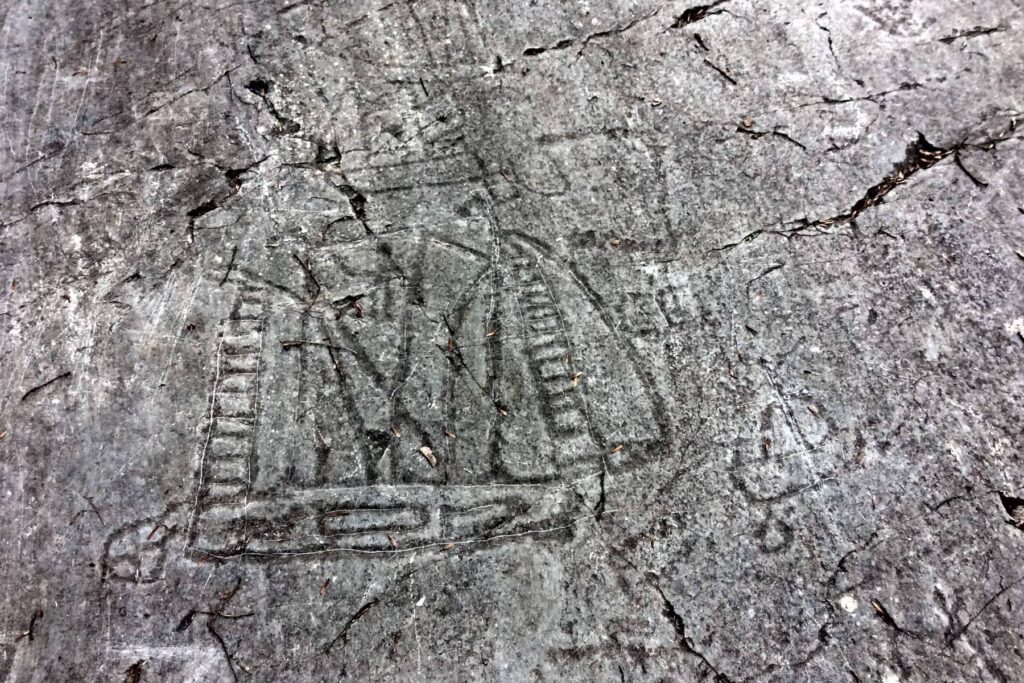
The earliest evidence of human presence dates back to prehistoric times, to the end of the second millennium B.C. with rock carvings. In fact, there are more than 250 rocks in the municipality in which more than 3,000 depictions have been engraved. Rocks as smooth as boards, perfect for writing stories and legends, as did the people who lived in these places between the 13th and 7th centuries B.C., depicting warriors and weapons through the technique of hammering.
There are also numerous Roman finds, both on the Rock and along the coast, such as at Punta San Vigilio, where in Roman times, there was a small temple consecrated to Benaco, a pagan deity, of which only a tombstone has come down to the present day, kept at the Museo Lapidario Maffeiano in Verona.
But it is to the Rock that one must refer to in order to understand that the Garda of its origins did not lap the lake at all. Goths, Lombards, Franks, and Ottons in the Holy Roman Germanic Empire, all the rulers who succeeded one another along the line of history preferred to watch the waters of the lake from above, from the “warda,” the “guard,” the fortified fortress from which to anticipate the enemy’s moves and attacks.
In the early Middle Ages the village at the foot of the Rocca will also come to be referred to as Garda. The word “Warda” over time will become vulgarized in language and become “Garda.” And it was the village of Garda that, around the year one thousand, gave the lake its name, replacing the original definition of “Benacus” on the maps.
From Benacus then, to Garda… This is evidenced in a writing by the bishop and historian Otto of Freising, who recalls in the first half of the 12th century the “Pond of Garda,” with a hint of resentment toward that fortress that had dared to resist even Barbarossa.
Yes, because the fortress was at the center of continuous struggles, withstood the siege of Frederick Barbarossa and passed from one lordship to another: from the Scaligeri to the Visconti and then fell into the hands of the Venetians. ILanzichenecchi and the plague struck the city and further weakened it until in 1797 it was Napoleon who put an end to Venetian rule.
Garda was first annexed to the Kingdom of Italy, and then, with the defeat at Waterloo, was incorporated into the Lombardy-Venetia Kingdom.
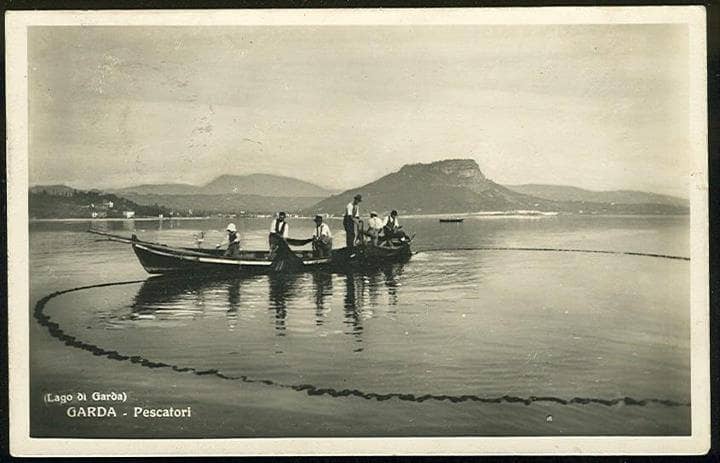
With the Third War of Independence Garda finally became Italian. Until the middle of the last century Garda was a town with an economy based on fishing, vines and silkworm breeding.
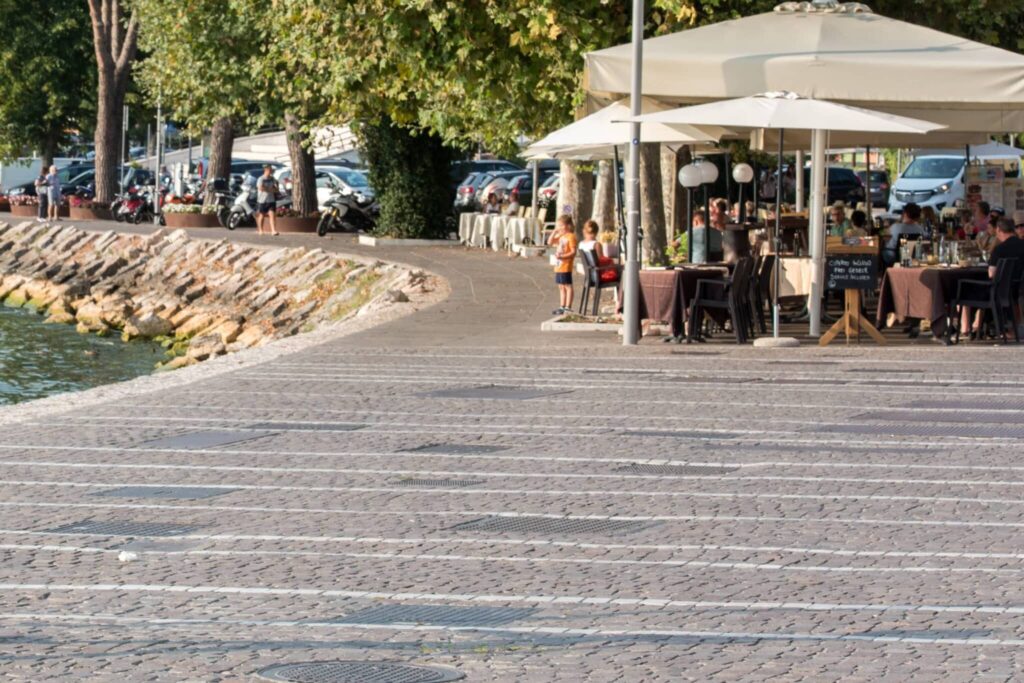
Garda is now a cozy and modern town to live in and visit all year round.